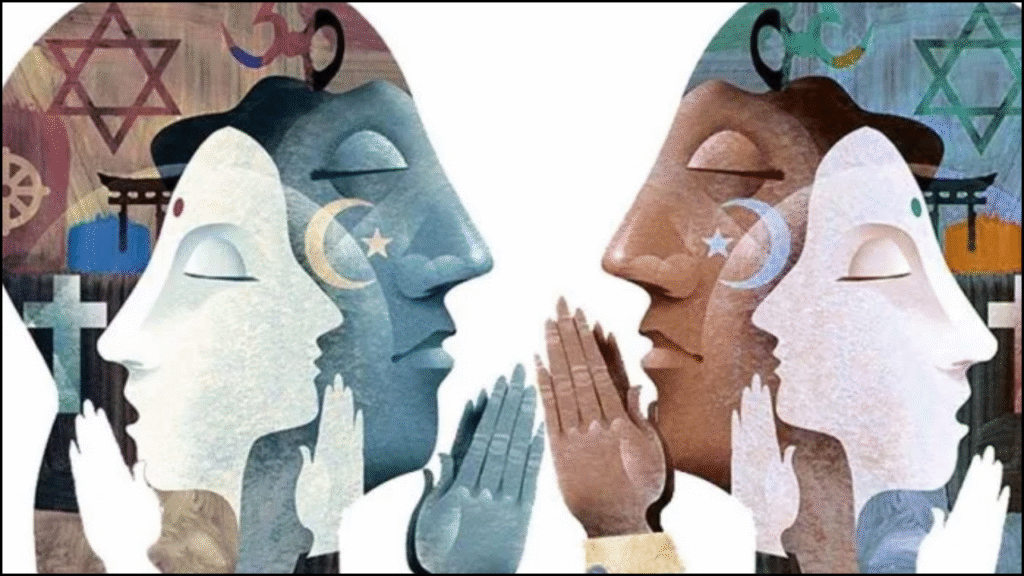
Love, as a profound human emotion, has been interpreted and practiced differently across cultures and belief systems. Religion often serves as one of the most powerful frameworks shaping how individuals and societies understand, express, and experience love. In Dr. Saida Heshmati’s Main Lab, the study of religion’s influence on love explores how faith traditions, moral teachings, and spiritual narratives define the boundaries and expressions of affection, compassion, and commitment. By integrating psychology, theology, and cross-cultural analysis, the lab investigates how love manifests as both a divine and human experience across various faith contexts.
Table of Contents
Purpose of the Study
To analyze how religious doctrines shape emotional and relational behavior.
To explore cultural variations in spiritual interpretations of love.
To identify the role of faith-based teachings in promoting compassion and forgiveness.
To study the relationship between religious devotion and emotional well-being.
To understand how religious communities cultivate social harmony through love ethics.
Core Research Themes in Dr. Heshmati’s Main Lab
Research Focus
Objective
Outcome
Spiritual Love
Examine divine-human emotional connections.
Understand how faith nurtures inner peace and empathy.
Moral Teachings on Love
Explore ethical dimensions of love within scriptures.
Identify shared moral values across religions.
Interfaith Emotional Understanding
Study love as a bridge between religious communities.
Promote harmony and cross-religious empathy.
Rituals and Love Practices
Analyze symbolic expressions of affection in worship.
Reveal emotional and cultural significance of rituals.
Religious Identity and Relationships
Investigate how faith shapes relational expectations.
Examine differences in marital and family love norms.
Types of Love in Major World Religions
Religion
Concept of Love
Spiritual Interpretation
Christianity
Agape (unconditional love), Eros (romantic love), Philia (brotherly love).
Love is divine, selfless, and the foundation of faith.
Islam
Mahabba (love for God and others), Rahma (compassion).
Love embodies mercy, faithfulness, and spiritual devotion.
Hinduism
Prema (divine love), Bhakti (devotional love).
Love unites the soul with the divine essence.
Buddhism
Metta (loving-kindness), Karuna (compassion).
Love arises from mindfulness and liberation from ego.
Judaism
Ahava (deep affection), Chesed (kindness).
Love reflects covenantal faithfulness and moral duty.
Key Insights from Dr. Heshmati’s Research
Religious beliefs strongly influence how individuals define moral love.
Faith traditions often integrate love with compassion, sacrifice, and duty.
Spiritual love contributes positively to psychological well-being and resilience.
Interreligious dialogue promotes empathy through shared love narratives.
Religious teachings inspire altruistic behavior and community solidarity.
Psychological Dimensions of Religious Love
Attachment to the Divine: Believers often form an emotional bond with God resembling parental or romantic love.
Moral Emotion Regulation: Religious teachings encourage forgiveness and emotional restraint.
Spiritual Empathy: Meditation and prayer enhance awareness of others’ suffering.
Self-Transcendence: Love becomes a pathway to overcoming selfishness and ego.
Purpose and Meaning: Faith-based love provides existential stability and hope.
Role of Religious Practices in Expressing Love
Practice Type
Description
Emotional Impact
Prayer and Meditation
Personal communication with the divine.
Enhances inner peace and self-compassion.
Charity (Almsgiving)
Helping the needy as an act of love.
Promotes empathy and social justice.
Community Worship
Collective expression of faith and belonging.
Strengthens social bonds and shared purpose.
Festivals and Rituals
Celebration of divine-human connection.
Reinforces unity and joy within communities.
Pilgrimage
Journey of spiritual devotion.
Deepens emotional connection with faith and others.
Cultural Variations in Religious Interpretations of Love
Region
Dominant Faith Influence
Expression of Love
Western Societies
Christianity and secular humanism.
Emphasis on romantic and altruistic love.
Middle Eastern Cultures
Islam and Judaism.
Focus on family love, devotion, and mercy.
South Asian Regions
Hinduism and Buddhism.
Spiritual devotion is intertwined with cosmic unity.
African Societies
Indigenous beliefs and Christianity.
Love expressed through communal care and storytelling.
East Asian Cultures
Confucianism and Buddhism.
Love is defined by harmony, duty, and compassion.
Findings Related to Emotional Well-Being
Religious individuals report higher life satisfaction when love is central to their faith practice.
Love-oriented spirituality reduces anxiety and depression levels.
Acts of service within faith groups enhance social support networks.
Religious forgiveness correlates with better emotional regulation.
Mindfulness and prayer promote resilience in romantic and familial relationships.
Religion and Gender in Love Expression
Aspect
Female Expression
Male Expression
Cultural Reflection
Devotion
Demonstrated through nurturing roles and compassion.
Expressed through protection and responsibility.
Reflects faith-based gender roles.
Emotional Sharing
Openly communicated in spiritual communities.
Often expressed through silent acts of faith.
Varies by tradition and leadership norms.
Spiritual Leadership
Involvement in emotional and caregiving roles.
Leadership is tied to teaching and authority.
Gender inclusion is evolving in modern faiths.
Ethical Teachings of Love Across Faiths
Christian Ethics: Emphasizes forgiveness, humility, and unconditional love.
Islamic Ethics: Highlights mercy, compassion, and mutual respect.
Hindu Ethics: Promotes detachment, devotion, and universal brotherhood.
Buddhist Ethics: Focuses on compassion as the root of enlightenment.
Jewish Ethics: Encourages justice, kindness, and covenantal loyalty.
Applications of Religious Love Research
Field
Research Application
Benefit
Psychology and Counseling
Integration of faith-based emotional healing models.
Supports holistic therapy and resilience.
Education
Teaching love ethics in multicultural settings.
Promotes tolerance and empathy in youth.
Conflict Resolution
Using shared love principles in interfaith dialogues.
Reduces prejudice and strengthens peace efforts.
Public Health
Enhancing community well-being through spiritual care.
Encourages compassion-centered health programs.
Community Development
Faith-based initiatives for social inclusion.
Strengthens cooperative and charitable behavior.
Challenges and Research Considerations
Balancing religious doctrine with modern psychological theory.
Addressing emotional suppression due to rigid moral codes.
Ensuring inclusivity for non-religious or secular participants.
Managing cultural sensitivity in cross-religious comparisons.
Avoiding biases when interpreting divine concepts of love.
Future Research Directions in Dr. Heshmati’s Main Lab
Expansion into digital spirituality and online expressions of religious love.
Comparative analysis of secular and faith-based love ideologies.
Integration of neuroscience to study the brain’s response to spiritual emotion.
Examination of interfaith couples and emotional adaptation.
Development of universal frameworks for ethical and compassionate love.
Closing Perspectives
Religion continues to shape humanity’s deepest understanding of love by linking emotional expression with spiritual purpose. In Dr. Saida Heshmati’s Main Lab, research reveals that faith traditions, though diverse in practice, share a unifying belief in love as a divine and moral force guiding human relationships. These studies highlight that when love is grounded in compassion, forgiveness, and empathy, it transcends cultural and religious boundaries. The integration of psychology and spirituality thus illuminates how faith not only nurtures inner peace but also strengthens the collective emotional fabric of societies around the world.
She is a creative and dedicated content writer who loves turning ideas into clear and engaging stories. She writes blog posts and articles that connect with readers. She ensures every piece of content is well-structured and easy to understand. Her writing helps our brand share useful information and build strong relationships with our audience.