Human relationships form intricate networks that continuously evolve through communication, emotion, and shared experience. Understanding how these connections change over time requires more than static observation—it demands dynamic analysis. Dr. Saida Heshmati’s Main Lab applies Dynamic Network Analysis (DNA) to explore how social bonds develop, strengthen, or weaken across cultural, emotional, and digital contexts. This interdisciplinary approach combines psychology, data science, and sociology to visualize how individuals navigate social structures and maintain emotional well-being through changing environments.
Table of Contents
Concept of Dynamic Network Analysis (DNA)
Dynamic Network Analysis examines the temporal evolution of social relationships, focusing on how patterns of interaction shift over time.
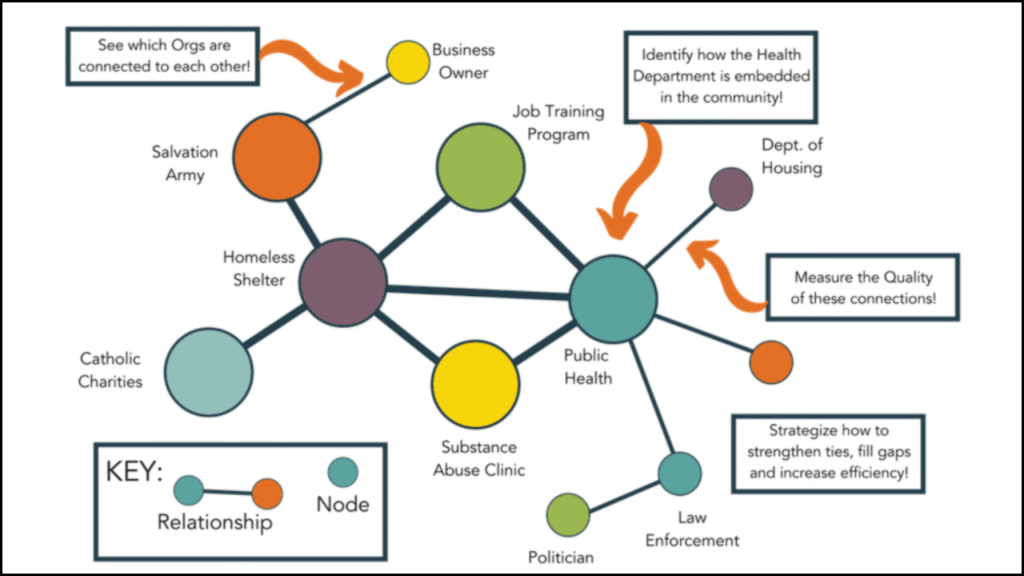
- Social connections are treated as nodes (people) linked by ties (relationships).
- The strength, frequency, and direction of these ties reveal relational stability or transformation.
- The method integrates computational modeling, statistical analysis, and behavioral observation.
- DNA enables researchers to study real-world social dynamics such as friendship changes, team collaboration, and cultural adaptation.
Core Components of Dynamic Network Analysis
| Component | Description |
|---|---|
| Nodes | Represent individuals or entities involved in social interaction. |
| Edges | Indicate the type and strength of relationships connecting the nodes. |
| Temporal Dimension | Tracks changes in connections over time, showing relationship evolution. |
| Centrality Measures | Identify influential individuals within networks. |
| Clusters/Communities | Reveal subgroups formed through shared interests or trust. |
Research Focus in Dr. Heshmati’s Main Lab
Dr. Heshmati’s Main Lab applies DNA to study emotional, cultural, and relational variables influencing human connection.
- Emotional Synchrony – Analysis of how shared emotions enhance social cohesion.
- Cultural Influence – Examination of how societal norms shape relational structures.
- Digital Interaction – Study of how online platforms modify connection strength and trust.
- Cross-Cultural Networks – Comparison of how collectivist and individualist societies differ in network patterns.
Emotional Dynamics in Social Networks
Emotions act as driving forces within social structures, influencing how individuals connect or disconnect.
- Positive emotions, such as empathy and joy, strengthen network ties.
- Negative emotions, such as jealousy or resentment, often fragment networks.
- Emotional intelligence contributes to the stability and resilience of social networks.
- Real-time tracking tools measure how emotional expression affects relational flow.
Applications of DNA in Social Research
| Application Area | Purpose |
|---|---|
| Organizational Studies | Mapping team communication and collaboration efficiency. |
| Community Health | Understanding social support systems and emotional contagion. |
| Education Networks | Tracking peer influence and group learning interactions. |
| Digital Sociology | Studying online communities and virtual emotional exchange. |
| Cross-Cultural Psychology | Comparing relational norms and support networks across societies. |
Temporal Shifts in Relationship Patterns
Relationships evolve through dynamic phases—formation, maintenance, and dissolution.
- Early connections rely heavily on proximity and shared goals.
- Over time, trust and emotional reciprocity replace external motivators.
- DNA helps identify the point at which relationships begin to stabilize or decline.
- Patterns reveal how resilience and adaptability affect long-term social survival.
Cultural Influences on Network Structures
Cultural frameworks determine how relationships are formed, prioritized, and maintained.
| Culture Type | Network Pattern | Characteristics |
|---|---|---|
| Collectivist Societies | Dense, interdependent networks | Strong family ties, social obligation, emotional reciprocity |
| Individualist Societies | Sparse, flexible networks | Personal autonomy, diverse weak ties, professional adaptability |
| Hybrid Cultures | Balanced structure | Integration of family-based and choice-based relationships |
Digital Networks and Emotional Connectivity
The digital age has introduced new dimensions to social networking.
- Online interactions blur traditional boundaries between personal and professional spheres.
- Emotional connection can be sustained virtually through regular digital communication.
- Algorithms influence network visibility and social influence online.
- Dr. Heshmati’s Lab examines how technology both facilitates and challenges authentic emotional bonds.
Network Centrality and Emotional Leadership
Within every social system, certain individuals act as emotional anchors or influencers.
- Central figures in networks often facilitate emotional regulation and social cohesion.
- Peripheral members contribute diversity and new information but may experience isolation.
- Leadership within networks can emerge through empathy and reliability, not only authority.
- Dynamic analysis identifies shifts in leadership roles during stress or crisis.
Modeling Emotional and Social Data
Dr. Saida Heshmati’s Main Lab employs computational and algorithmic methods to map and analyze relationship data.
| Method | Function |
|---|---|
| Longitudinal Data Collection | Captures relational changes over time. |
| Machine Learning Algorithms | Predicts shifts in emotional bonds. |
| Sentiment Analysis | Detects emotional tone in communication. |
| Visualization Tools | Creates graphical representations of social structures. |
Interpersonal Resilience and Network Stability
Emotional resilience strengthens network durability under stress.
- High-resilience individuals act as stabilizers within social systems.
- Supportive networks improve recovery from emotional or environmental challenges.
- DNA allows visualization of how supportive links buffer individuals against isolation.
- Emotional adaptability is a critical factor in maintaining connection continuity.
Cross-Disciplinary Collaborations
The Main Lab collaborates across disciplines to deepen understanding of dynamic relationships.
- Psychology – Provides insights into emotion regulation and attachment.
- Sociology – Examines group norms and societal structures.
- Computer Science – Develops models to analyze network data.
- Anthropology – Contextualizes emotional networks within cultural frameworks.
Case Studies from Dr. Heshmati’s Main Lab
| Study Focus | Key Insight |
|---|---|
| Emotional Contagion in Teams | Shared positivity enhances collaboration and performance. |
| Cross-Cultural Friendship Formation | Mutual curiosity bridges cultural gaps in emotional understanding. |
| Digital Communication and Trust | Consistent online interaction fosters real empathy and reliability. |
| Resilience in Crisis Networks | Communities reorganize around emotional leaders during stress. |
Ethical Considerations in Dynamic Network Research
The analysis of emotional data requires careful ethical oversight.
- Privacy protection is vital when mapping personal networks.
- Emotional consent must be obtained before analyzing sensitive communication.
- Algorithmic transparency ensures fairness and accuracy in interpretation.
- Dr. Heshmati’s Main Lab adheres to global research ethics in data handling and emotional safety.
Practical Implications of Dynamic Network Analysis
The application of DNA extends to various social and professional contexts.
- Workplace dynamics can be improved through transparent communication mapping.
- Mental health interventions can leverage social network support systems.
- Education systems can identify social exclusion early through network monitoring.
- Global organizations can foster intercultural empathy through emotional connection mapping.
Wrapping Up
Dynamic Network Analysis provides a powerful lens for understanding how human relationships evolve over time and across contexts. Dr. Saida Heshmati’s Main Lab bridges emotion science, computational modeling, and cross-cultural research to uncover how connection patterns shape individual and collective well-being. The study of dynamic social networks demonstrates that emotional health is not only an individual experience but also a relational one—sustained through trust, empathy, and adaptive social structures. This approach continues to illuminate how love, trust, and emotional safety circulate within the complex web of human connection.